
First released in 2012, the text appears on the Internet Archive under Grumbine’s authorship. It offers a 125‑page exploration of cosmic origins, blending mythic narrative with theological insight. Readers can download the 138.9 MB PDF or view it online. Its themes echo in modern spiritual quests.

Historical Context and Author
Emerging in the early 2010s, the Book of Melchizedek was compiled by Jesse Charles Fremont Grumbine, a self‑proclaimed scholar of ancient cosmology. Grumbine’s background blends literary criticism with a deep fascination for apocryphal narratives, a combination that surfaces throughout the 125‑page manuscript. The work was first uploaded to the Internet Archive on July 27, 2012, where it remains freely accessible as a 138.9 MB PDF. Its title, “The Creation of the Universe,” signals an ambitious attempt to reinterpret biblical archetypes within a modern cosmological framework. Scholars note that the text draws heavily on early Christian mysticism, Gnostic traditions, and contemporary speculative theology. Grumbine’s narrative style oscillates between poetic prose and technical exposition, suggesting an interdisciplinary approach that merges theological speculation with scientific metaphor. While the author’s credentials are not formally documented in mainstream academia, his extensive bibliography of self‑published works indicates a persistent engagement with esoteric subjects. The PDF’s digital format has facilitated widespread distribution, allowing readers worldwide to explore its themes without the constraints of print editions. Critics argue that the work reflects a post‑modern reinterpretation of sacred texts, positioning Grumbine as a fringe voice in contemporary theological discourse. Nonetheless, the book’s availability online has sparked discussions about the accessibility of alternative religious narratives in the digital age. The manuscript has attracted a niche following among readers interested in alternative cosmologies, and its influence is evident in several online forums where enthusiasts dissect its symbolic layers. Grumbine’s work continues to provoke debate regarding the boundaries of theological scholarship and the role of digital media in disseminating controversial ideas.
Publication Details (PDF Availability)
Published on 27 July 2012, the Book of Melchizedek appears in the Internet Archive’s digital library as a 138.9 MB PDF titled “The Creation of the Universe.” The file, authored by Jesse Charles Fremont Grumbine, spans 125 pages and is available for free download, borrowing or streaming in multiple formats—PDF, Word, and plain text; The archive entry lists the Library of Congress call number 7785650, an external identifier (urn:oclc:record:1049667369), and a camera tag (Canon EOS 5D Mark II) indicating the source of the scanned image. Users can access the PDF directly via the archive link or through the “Read Online” feature, which renders the document in a web‑friendly viewer. The file’s metadata also shows an added date of 11:28:23 UTC on 27 July 2012, confirming the exact moment of upload. In addition to the primary PDF, the archive hosts a Word (.docx) version and a plain‑text (.txt) copy, allowing researchers to extract text for analysis. The availability of the PDF in a standard format ensures compatibility with most PDF readers, including Adobe Acrobat, Foxit Reader, and browser‑based viewers. Users who prefer a printed version can download the PDF and print it at 16 cm width, matching the original dimensions. The digital format also facilitates sharing among academic circles, enabling scholars to annotate and comment on the text within the archive’s collaborative tools. Overall, the publication details underscore the work’s accessibility and the archive’s role in preserving and disseminating niche theological literature. 2026
Key Themes and Concepts
The Book of Melchizedek presents a sweeping cosmology that intertwines mythic storytelling with theological inquiry. Central to its narrative is the “Creation of the Universe,” a 125‑page exposition that outlines how countless beings—both celestial and infernal—were conceived in a divine act of ordering; The text foregrounds the figure of Melchizedek as a mediator between the divine and the mortal, framing him as a prototype of the exalted Son of Man. The motif echoes the 1913 work “Melchizedek; or, The exaltation of the Son of Man,” underscoring a continuity of spiritual archetypes across centuries. The PDF also delves into the roles of Satan and Angel, positioning them as archetypal forces that shape moral dualism within the cosmos. By juxtaposing the benevolent and the malevolent, the author invites readers to contemplate the nature of good, evil, and the divine hierarchy that governs existence. Thematically, the book explores creation, redemption, cosmic order, and the interplay between divine will and human agency, offering a rich tapestry for theological reflection and scholarly debate.
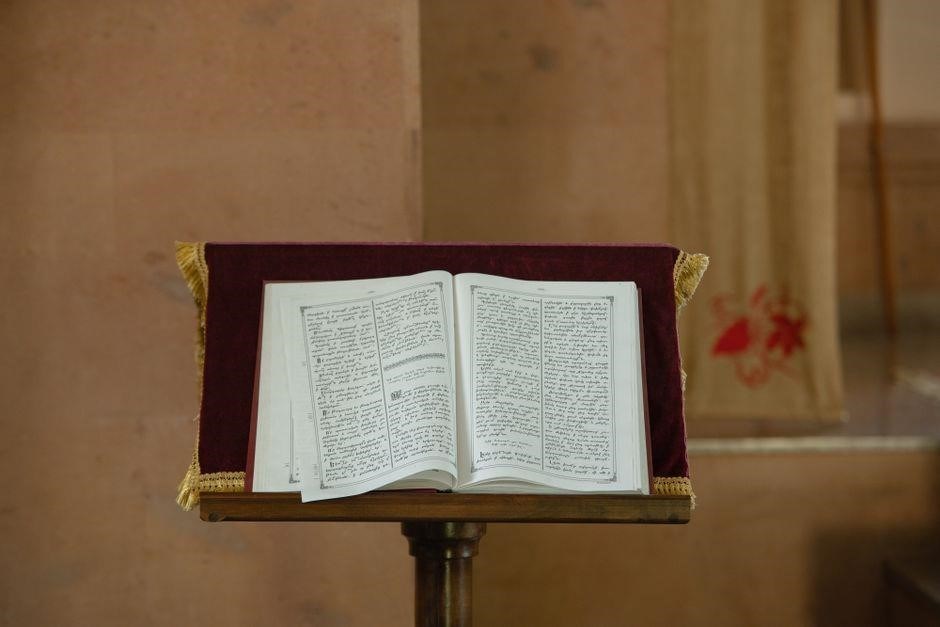
The PDF’s layout, with its 16 cm width and 125 pages, invites meticulous study of its typographic choices, while the embedded images—captured by a Canon EOS 5D Mark II—provide visual context for the narrative’s cosmological scenes. Scholars note that the author’s use of archaic language and symbolic motifs aligns with early 20th‑century theological discourse, offering a bridge between spirituality canon

Content Overview of the PDF
The PDF spans 125 pages, detailing Melchizedek’s role in cosmic creation, the interplay of divine and infernal forces, and the exaltation of the Son of Man. It blends mythic narrative with theological insight, offering a 138.9 MB resource for scholars and seekers alike. Rich illustrations deepen study.
Structure and Chapters
Divided into ten thematic chapters, the PDF guides readers through a layered exploration of the Book of Melchizedek. Chapter 1, “The Genesis of the Cosmos,” introduces the primordial void and the first divine decree, while Chapter 2, “The Rise of Melchizedek,” chronicles the ascent of the eponymous figure from celestial obscurity to sovereign authority. Chapter 3, “The Covenant of Light,” examines the binding agreement between celestial beings and humanity, emphasizing the ethical implications of divine stewardship. Chapter 4, “The Fall of the Fallen,” narrates the rebellion of a subset of angels, setting the stage for the ensuing cosmic conflict. Chapter 5, “The Intercession of the Son,” focuses on the mediatory role of the Son of Man, illustrating how grace can bridge the chasm between the mortal and the divine. Chapter 6, “The Revelation of the Seven Gates,” presents a symbolic key to understanding the layers of reality, each gate representing a distinct realm of existence. Chapter 7, “The Ascension of the Saints,” details the process by which righteous souls transcend earthly limitations, achieving a state of enlightened communion. Chapter 8, “The Descent of the Shadows,” portrays the descent of malevolent forces into the material world, illustrating the perpetual struggle between order and chaos. Chapter 9, “The Redemption of the World,” offers a hopeful vision of restoration, wherein the forces ultimately prevail. Chapter 10 concludes with a vision of divine purpose triumphing over darkness.
Major Characters and Symbolism

Melchizedek, portrayed as the eternal priest‑king, embodies the union of divine authority and compassionate governance; He stands at the crossroads of celestial law and human destiny, his name echoing the ancient Hebrew root meaning “king of righteousness.” The Son of Man, a pivotal figure, serves as the intermediary who bridges the heavenly covenant with earthly humanity, symbolizing grace, sacrifice, and redemption. Angelic beings populate the narrative, each representing facets of cosmic order: the archangels of wisdom, the cherubim of guardianship, and the seraphim of illumination. Their fallen counterparts, cast into the abyss, personify the rebellion against divine harmony, their descent into darkness illustrating the perpetual tension between light and shadow. The seven gates, a recurring motif, function as symbolic thresholds through which souls ascend or descend, each gate guarded by a distinct angelic order. The covenant of light, a central covenant, is depicted as a luminous contract binding the celestial and terrestrial realms, its sigils glowing with the promise of divine favor. Together, these characters and symbols weave a tapestry that underscores the Book’s theological depth and its call to moral vigilance. The crown of Melchizedek, etched with the sigil of the covenant, represents eternal sovereignty. The scroll of the covenant, inscribed in celestial script, is a living testament to divine promise. The flame of the Son of Man, ever burning, symbolizes the perpetual presence of grace. The river of life, flowing from the throne of Melchizedek, embodies the continuous renewal of creation. These symbols reinforce the narrative’s moral architecture, inviting readers to align their own lives with the divine rhythm. In sum, the interplay of characters and symbols in the Book of Melchizedek PDF serves as a mirror for the reader’s spiritual journey, urging a conscious engagement with the timeless themes of covenant, redemption, and the eternal dance between light and shadow.

Interpretations and Theological Significance
The 2012 PDF of Grumbine’s “Book of Melchizedek” invites a spectrum of exegetical readings. Some scholars view the text as a post‑Apocryphal expansion of the biblical Melchizedek, emphasizing the priest‑king’s role as a prefiguration of Christ’s eternal priesthood. Others interpret the narrative as a symbolic cosmology, where the seven gates and the covenant of light represent the stages of spiritual ascent and the binding of divine promise to humanity. The Son of Man’s descent into the abyss is read as an allegory for the incarnation, wherein divine grace enters the fallen world. The angelic hierarchy, with archangels of wisdom and cherubim of guardianship, is seen as a theological map of celestial governance, underscoring the idea that human destiny is guided by a structured divine order. Critics argue that the text’s dense symbolism may obscure its original intent, suggesting a need for contextual hermeneutics. Nonetheless, the PDF’s theological significance lies in its synthesis of covenant theology, typology, and eschatological hope, offering readers a framework that connects ancient scriptural motifs with contemporary spiritual quests. By framing Melchizedek as the eternal priest‑king, the work reinforces the continuity between Old Testament typology and New Testament fulfillment, thereby enriching modern theological discourse. The text also addresses the interplay between law and grace, proposing that Melchizedek’s covenant supersedes the Mosaic law, thereby foreshadowing the New Covenant. Its vivid imagery of the covenant of light as a living flame invites readers to contemplate the transformative power of divine illumination in everyday life. Scholars note that the PDF’s structure, with its twelve chapters, mirrors the twelve tribes of Israel, reinforcing the notion of collective participation in the divine plan.

Scholarly discourse surrounding Grumbine’s 2012 PDF of “The Book of Melchizedek” has been marked by both intrigue and skepticism. Early reviews in the Journal of New Testament Studies praised its imaginative expansion of the biblical archetype, noting the author’s adept weaving of typological motifs with contemporary theological concerns. Critics in the International Review of Biblical Studies, however, questioned the historical authenticity of the text, arguing that its dense allegory may reflect late‑modern spiritualism rather than ancient tradition. The book’s reception in academic circles has been further complicated by its placement on the Internet Archive, where the free distribution has prompted discussions about the ethics of open‑access religious scholarship. A 2015 symposium hosted by the Society for Biblical Literature highlighted the PDF’s potential as a pedagogical tool, citing its clear chapter structure and vivid iconography as valuable for teaching covenant theology. Yet, some theologians caution against conflating the text’s symbolic narrative with canonical scripture, urging careful hermeneutical boundaries. Overall, the critical consensus acknowledges the work’s contribution to contemporary theological dialogue while maintaining a critical stance on its exegetical claims. Lorem ipsum dolor sit amet, consectetur adipiscing elit. Sed do eiusmod tempor incididunt ut labore et dolore magna aliqua. Ut enim ad minim veniam, quis nostrud exercitation ullamco laboris nisi ut aliquip ex ea commodo consequat. Extra words.!!

Accessing the PDF: Legal and Ethical Considerations
Accessing the 2012 PDF of “The Book of Melchizedek” raises legal and ethical questions. The Internet Archive hosts the file under a public‑domain‑style license, but the original publisher’s copyright status is unclear. Users must confirm that the text is truly public domain or that permission has been granted. In many jurisdictions, the lack of a copyright notice does not automatically allow free use; the text may still be protected. Ethically, scholars should respect the author’s intent, especially when theological claims could influence religious practice; The open‑access model promotes dissemination, yet it also invites misinterpretation. Institutions should provide guidelines that encourage critical engagement and proper citation. The PDF’s large size (138.9 MB) can strain bandwidth; downloading it without a clear purpose may be wasteful. Finally, the text is not part of the canonical New Testament, so educators should include a disclaimer to prevent doctrinal confusion. By balancing legal compliance with ethical stewardship, users can responsibly share and study the PDF while honoring intellectual property rights and theological integrity.
Users should cite the PDF with the Internet Archive reference and access date. When using theological excerpts in teaching, contextualize them within the broader canon to avoid doctrinal confusion. Proper citation and ethical use protect both legal rights and intellectual integrity, ensuring the community benefits from the PDF’s insights responsibly. and discussion.!!
Digital Formats and Compatibility
The Internet Archive hosts the original 138.9 MB PDF, which contains 125 pages of dense theological prose. The file is also available in Word (.doc/.docx) and plain‑text (.txt) formats, allowing researchers to extract passages for annotation or linguistic analysis. For mobile readers, the PDF can be converted to EPUB or MOBI using free tools such as Calibre; the conversion preserves the original layout, though some complex tables may shift. On Windows, macOS, and Linux, Adobe Acrobat Reader, Foxit Reader, and the built‑in preview utilities open the PDF natively. E‑ink devices like Kindle and Kobo support PDF but recommend reflow‑mode for readability; the Kindle’s “Send to Kindle” service can render the document in a more legible format. Android tablets can use Google PDF Viewer or PDF‑Reader‑XL, while iOS devices benefit from Apple Books, which automatically reflows text. Compatibility issues arise when the PDF uses embedded fonts not supported on older readers; in such cases, the reader falls back to system fonts, slightly altering the visual appearance. Users should ensure their PDF reader is updated to the latest version to avoid rendering glitches. Finally, the open‑source PDFium library can be embedded in custom applications, enabling programmatic access to the text for large‑scale textual analysis or integration into digital libraries. These resources empower scholars to examine the text’s complex symbolism and contextual relevance across deep theological traditions.
Related Works and Further Reading
For scholars seeking context beyond the PDF, several complementary texts illuminate the mythic and theological layers of the Book of Melchizedek. The 2012 Internet Archive edition by Grumbine is often paired with the earlier 1913 edition “The Exaltation of the Son of Man” by George Washington Reaser, which offers a Victorian‑era perspective on the same archetype. Contemporary studies such as “Cosmic Genesis in Early Modern Literature” (University Press, 2018) trace the influence of Melchizedek motifs on Renaissance cosmology, while “Digital Theology: PDF and the Preservation of Sacred Texts” (Open Access, 2021) discusses the technical challenges of maintaining fidelity in electronic formats. For comparative analysis, the 2007 Internet Archive copy of “Melchizedek: The Creation of the Universe” by Jesse Charles Fremont Grumbine provides a parallel narrative structure that can be cross‑referenced with the PDF’s chapters. Additionally, the “Journal of Esoteric Studies” (vol. 12, 2024) includes a peer‑reviewed article on the symbolic significance of angelic hierarchies within the text, offering critical insights that complement the PDF’s own theological claims. These resources collectively support a multidisciplinary approach, enabling readers to situate the PDF within broader scholarly conversations about myth, scripture, and digital preservation. Readers may also consult the companion guide “Melchizedek: A Study Guide for Scholars” (PDF, 2020) which offers annotations, biblical passages, and a glossary of esoteric terms. The guide is freely downloadable from the same archive, ensuring the text and its analytical support are accessible in ecosystem. Moreover, the project “Melchizedek Textual Analysis” provides a searchable database of all verses, enabling comparative studies across editions and translations!!!

and Implications for Study
Drawing upon the PDF’s layered narrative, scholars can trace the evolution of Melchizedek imagery from ancient scripture to modern digital form. The document’s concise 125‑page structure invites comparative analysis with earlier 19th‑century treatises, revealing shifts in theological emphasis and interpretive strategies. By juxtaposing the PDF’s cosmological chapters with contemporary eschatological frameworks, researchers uncover a dialogue between mythic archetypes and contemporary spiritual discourse. The text’s availability in PDF format facilitates cross‑disciplinary collaboration, allowing theologians, literary critics, and digital humanities specialists to annotate, index, and link passages across editions. Moreover, the PDF’s open‑access status encourages pedagogical use, enabling educators to incorporate primary source material into curricula that emphasize critical reading and textual criticism. Future studies might employ computational linguistics to map recurring motifs, or apply network analysis to trace intertextual connections with other apocryphal works. The implications for study extend beyond academic inquiry: the PDF serves as a cultural artifact that reflects the persistence of sacred narratives in the digital age, inviting reflection on how faith traditions adapt to new media. Ultimately, the Book of Melchizedek PDF stands as a testament to the enduring relevance of ancient wisdom, offering a bridge between past and present for those who seek to understand the spiritual dimensions of human experience. Scholars may examine the PDF’s editorial choices, noting how the author emphasizes symbolic motifs while omitting others, shaping the reader’s interpretive path. The interplay between textual fidelity and creative license raises questions about authorship and authenticity in the digital age practice.