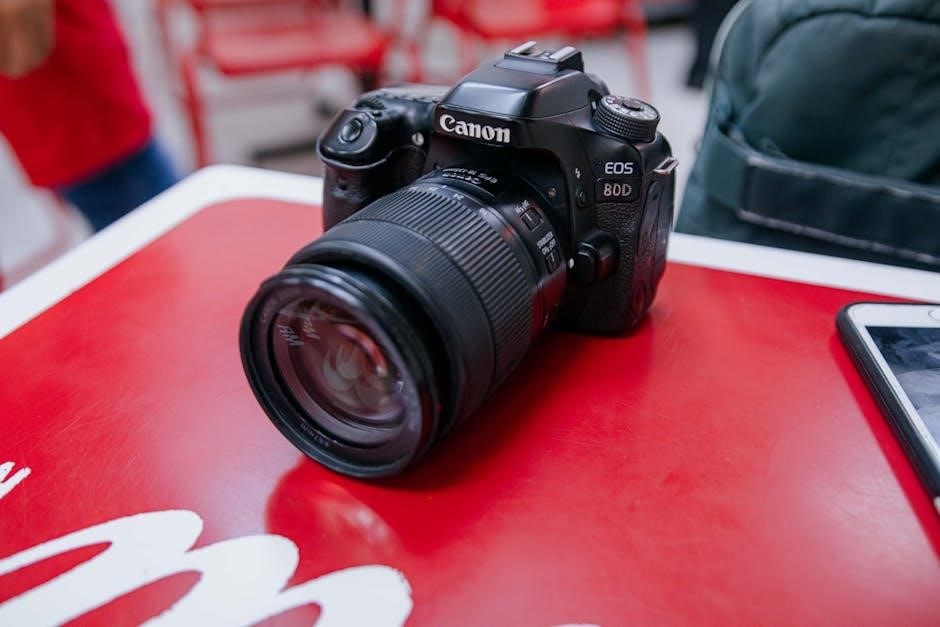
Canon 70D Owners Manual: A Comprehensive Guide
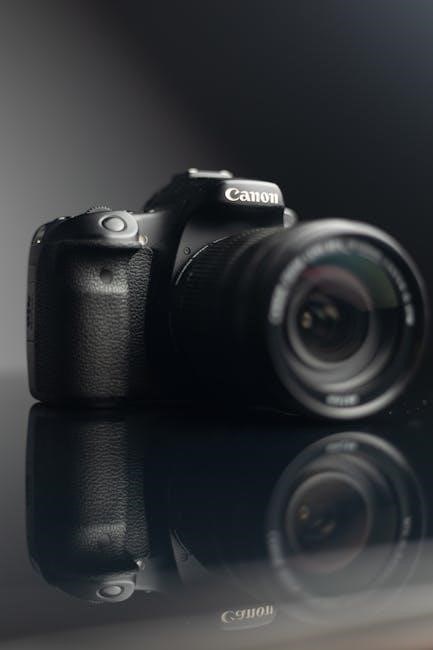
Welcome! This manual provides detailed guidance for your Canon 70D. It’s designed to maximize your photographic experience, covering everything from initial setup to advanced features.
Congratulations on acquiring the Canon 70D, a powerful and versatile Digital SLR camera designed for both enthusiasts and professionals. This camera builds upon Canon’s legacy of imaging excellence, offering a compelling blend of performance, features, and user-friendliness. This manual serves as your comprehensive companion, guiding you through every aspect of the 70D’s capabilities.
The Canon 70D boasts a 20.2-megapixel APS-C CMOS sensor and the DIGIC 5+ Image Processor, delivering exceptional image quality with remarkable detail and clarity. Its advanced 19-point all cross-type autofocus system, coupled with Dual Pixel CMOS AF, ensures swift and accurate subject tracking, even in challenging conditions. The camera’s intelligent metering system and customizable Picture Styles empower you to achieve stunning results in diverse shooting scenarios.
Beyond its core imaging prowess, the 70D incorporates innovative features like built-in Wi-Fi connectivity for seamless image sharing and remote control. Its vari-angle touchscreen LCD monitor provides flexible composition options, while the robust build quality ensures durability for years to come. This manual will unlock the full potential of your Canon 70D, helping you capture unforgettable moments with confidence and creativity.
Unboxing and Initial Setup
Carefully unpack your Canon 70D, ensuring all components are present. The box should contain the camera body, battery, battery charger, power cable, wide strap, and various manuals including this owner’s guide. Inspect each item for any visible damage. Begin by inserting the battery into the battery compartment, located at the bottom of the camera.
Next, connect the battery charger to a power outlet and charge the battery fully – indicated by the charging lamp turning off. While charging, attach the strap to the camera body using the provided strap connectors. Once charged, power on the camera by moving the power switch to the ‘ON’ position.
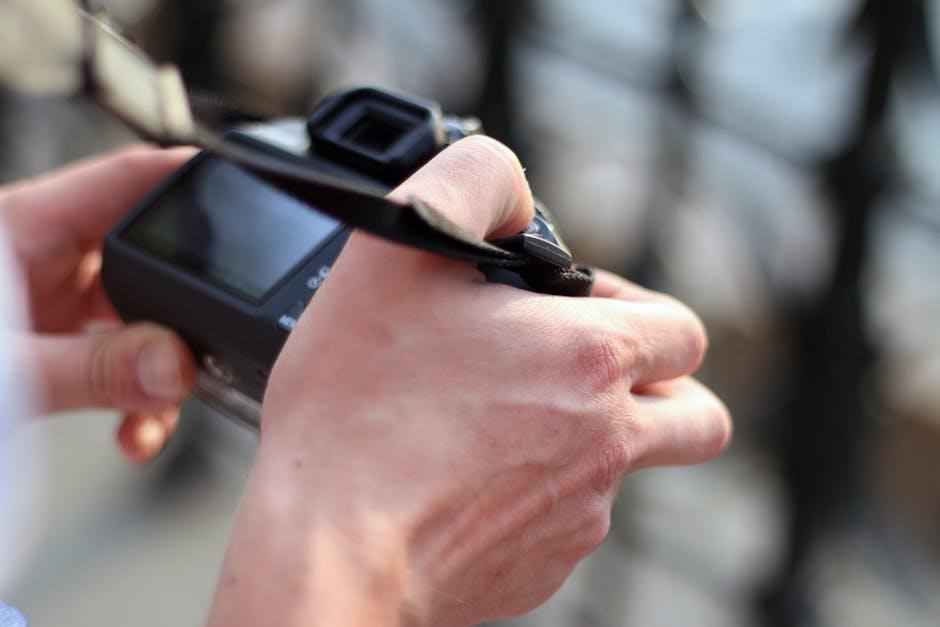
Follow the on-screen prompts to set the initial settings, including language, date, and time. You’ll also be prompted to format the memory card. Ensure you have a compatible SD card inserted before proceeding. Register your camera online with Canon to access support and updates. Familiarize yourself with the basic controls before diving into more advanced features.
Understanding the Camera Body and Controls
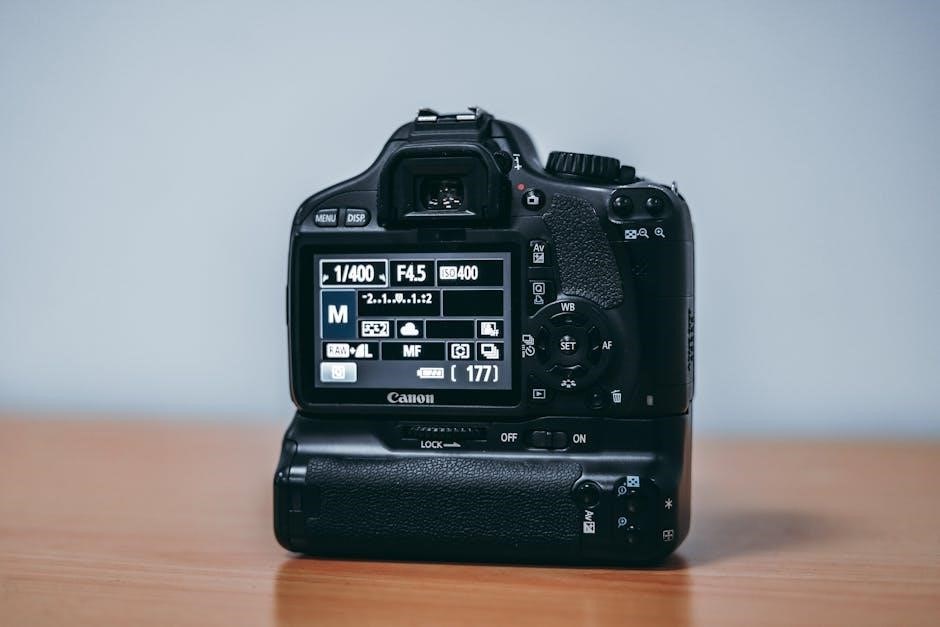
The Canon 70D’s body features a robust build and intuitive control layout. On top, you’ll find the power switch, shutter button, mode dial (Auto, Program, Aperture Priority, Shutter Priority, Manual), and the quick control dial for adjusting settings. The rear panel houses the LCD screen, directional buttons, and a multi-function controller for navigating menus.
The camera also incorporates an autofocus start button, allowing for independent autofocus activation. Explore the various buttons and dials to understand their functions. The top LCD panel displays crucial shooting information like aperture, shutter speed, ISO, and battery level. The camera grip is ergonomically designed for comfortable handling during extended shooting sessions.
Pay attention to the placement of the menu button, which grants access to a comprehensive range of customizable settings. Understanding these controls is fundamental to mastering the Canon 70D and unlocking its full potential. Regularly refer to the camera’s diagram in this manual for visual guidance.
The DIGIC III/IV Image Processor
At the heart of the Canon 70D lies the powerful DIGIC III/IV image processor. This processor is crucial for delivering exceptional image quality, fast processing speeds, and efficient performance. It handles tasks like image noise reduction, color reproduction, and overall image clarity. The DIGIC processor significantly impacts the camera’s ability to capture detailed photos and videos, even in challenging lighting conditions.
The processor’s capabilities extend to high-speed continuous shooting, enabling you to capture fleeting moments with precision. It also plays a vital role in the camera’s autofocus system, ensuring accurate and responsive subject tracking. Furthermore, the DIGIC processor contributes to the camera’s overall energy efficiency, extending battery life during extended shooting sessions.
Understanding the processor’s role helps appreciate the technological foundation of the Canon 70D’s performance. It’s a key component that elevates the camera’s capabilities beyond its physical attributes.
Shutter Count Information & Software
Determining the shutter count of your Canon 70D can be useful for assessing the camera’s usage and potential lifespan. While Canon doesn’t natively provide a method to view shutter count through the camera’s menu or official software, third-party tools can assist. Historically, Canon hasn’t offered built-in functionality for shutter count viewing.
Software like “40DShutterCount,” developed by astrojargon.net based on the Canon SDK, allows users to extract this information. However, compatibility and reliability can vary. It’s important to download software from trusted sources to avoid potential security risks. Be aware that these tools may not always be accurate or function correctly with all firmware versions.
Understanding the limitations of these methods is crucial. The shutter count is just one factor in evaluating a camera’s condition; overall care and maintenance are equally important. Regularly checking for updates to any third-party software is also recommended.
Canon EF Lens Compatibility
The Canon 70D boasts excellent compatibility with a vast range of Canon EF and EF-S lenses, offering photographers considerable flexibility. This includes lenses from various generations, allowing users to leverage existing investments or explore new optical possibilities. The EF mount has been a cornerstone of Canon’s system for decades, ensuring a broad selection.
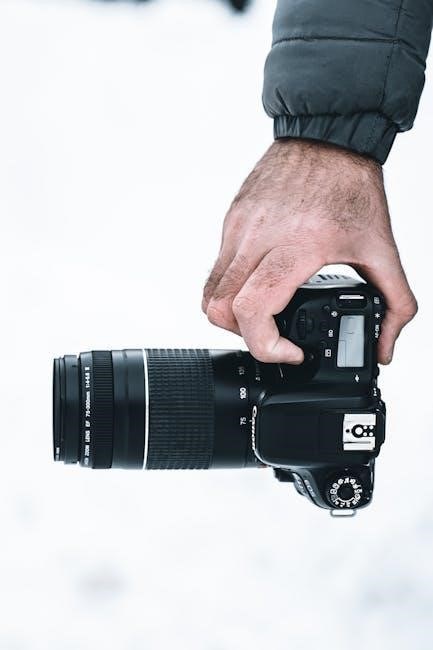
Older EF lenses, like the Canon EF 28-80mm f/2.8-4L USM, are fully functional, providing excellent image quality despite their age. Newer lenses with Nano USM technology, first introduced with the EOS 80D and EF-S 18-135mm, also work seamlessly, delivering advanced autofocus performance.
Understanding lens serial numbers, which changed in 2011 to a ten-digit system, can help determine production dates. While compatibility is generally excellent, always verify lens functionality after mounting. Canon’s commitment to backward compatibility ensures a smooth experience for photographers.
Focusing System: 7-Point Autofocus
The Canon 70D features a sophisticated 7-point autofocus (AF) system, designed for accurate and reliable subject tracking. This system utilizes cross-type AF points, enhancing its ability to acquire focus in various lighting conditions and subject orientations. While not as extensive as some higher-end models, it provides excellent performance for a wide range of photographic scenarios.
The AF system is complemented by Canon’s eye-control AF functionality, allowing photographers to select AF points simply by looking at their desired subject. This feature offers a unique and intuitive focusing experience, particularly useful for dynamic shooting situations. The camera also boasts advanced multi-point exposure measurement.
Furthermore, the 70D’s AF system incorporates excellent tracking and predictive focusing capabilities, ensuring sharp images even when photographing moving subjects. The autofocus start button, a newer feature introduced on models like the EOS-1D Mark III, allows for independent AF activation.
Nano USM Technology
Canon’s Nano USM (Ultrasonic Motor) represents a significant advancement in autofocus technology, debuting alongside the EOS 80D and EF-S 18-135mm f/3.5-5.6 IS USM lens. It isn’t a completely new generation, building upon the foundations of previous USM and STM (Stepping Motor) designs. However, Nano USM achieves a unique balance of speed and quiet operation, surpassing the capabilities of its predecessors.
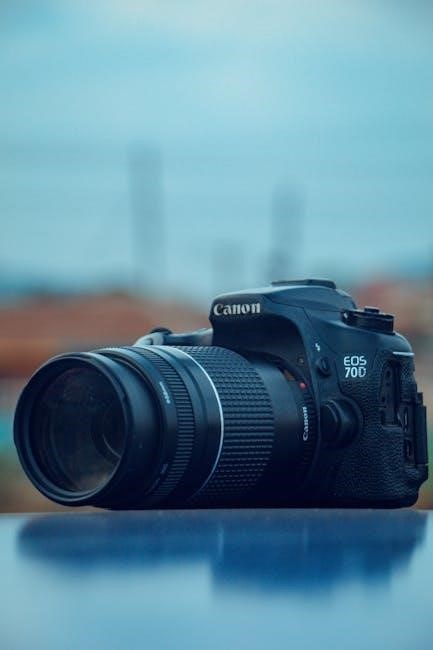
This technology utilizes a newly designed ultrasonic motor unit with smaller components, enabling faster and more precise focusing. The result is exceptionally smooth and silent autofocus performance, making it ideal for both still photography and videography. Nano USM minimizes motor noise, crucial for capturing clean audio during video recording.
Compared to traditional USM motors, Nano USM offers improved responsiveness and accuracy, particularly during continuous shooting and subject tracking. It provides a noticeable upgrade in autofocus performance, enhancing the overall shooting experience.
Autofocus Start Button Functionality
The Canon 70D introduces an autofocus (AF) start button, a feature initially found on the EOS-1D Mark III. This button separates the autofocus activation from the shutter release, offering greater control and flexibility for photographers. Currently, this functionality is limited to a select few Canon models, enhancing their operational capabilities.
This dedicated button allows users to initiate autofocus independently, locking focus on a subject without immediately taking a picture. This is particularly useful in situations where you need to recompose your shot after focusing, ensuring accurate focus on your desired point. The AF start button works in conjunction with the AF-ON button, providing a customized autofocus workflow.
Alongside autofocus initiation, the button can also be programmed for AE (Auto Exposure) lock and shutter release, offering versatile customization options. This feature empowers photographers to tailor the camera’s controls to their specific shooting style and preferences;

Exposure Modes: Auto, Program, Aperture Priority, Shutter Priority, Manual
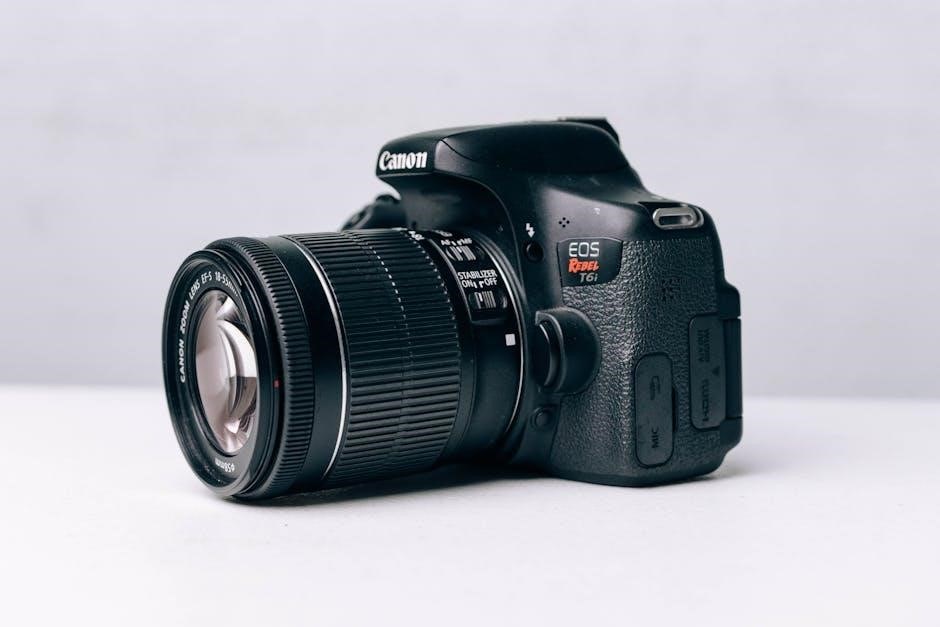
The Canon 70D offers a comprehensive suite of exposure modes, catering to photographers of all skill levels. Auto mode simplifies shooting by letting the camera handle all settings, ideal for beginners or quick snapshots. Program mode (P) allows for some user control, letting you adjust ISO, white balance, and picture styles while the camera determines aperture and shutter speed.
For more creative control, Aperture Priority (Av) mode lets you set the aperture, influencing depth of field, while the camera selects the appropriate shutter speed. Conversely, Shutter Priority (Tv) mode allows you to control shutter speed, freezing or blurring motion, with the camera adjusting the aperture.
Finally, Manual (M) mode grants complete control over both aperture and shutter speed, offering the ultimate flexibility for experienced photographers. Understanding these modes is crucial for mastering your Canon 70D and achieving desired photographic results. Experimentation is key to unlocking the camera’s full potential.
Metering Modes: Evaluative, Partial, Spot, Center-Weighted Average
The Canon 70D’s metering system is vital for accurate exposure. Evaluative metering, the default, analyzes the entire scene to determine the optimal exposure, suitable for most situations. It’s intelligent and generally provides well-balanced results. However, challenging lighting demands alternative modes.
Partial metering assesses exposure based on a smaller area in the center of the frame, useful when the subject is backlit or strongly contrasted against its surroundings. Spot metering takes this further, measuring light from a very small point, ideal for precise exposure of a specific subject element.
Center-weighted average metering prioritizes the center of the frame while still considering the overall scene. This mode is a good compromise between evaluative and spot metering. Choosing the correct metering mode ensures your images are properly exposed, preserving detail and capturing your vision effectively. Understanding these options is key to photographic success.
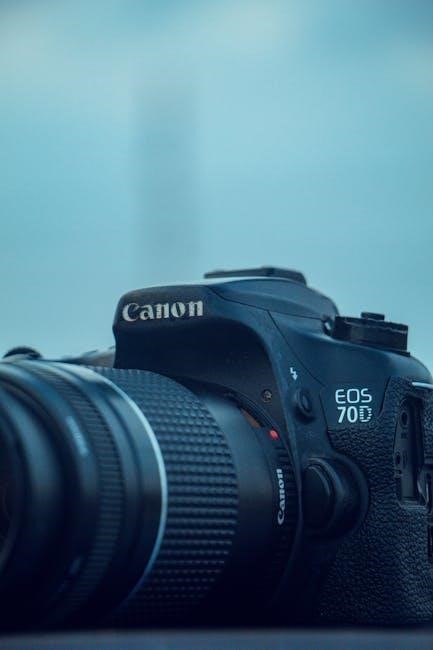
Picture Styles and Customization
Canon’s Picture Styles offer pre-set image processing parameters, influencing color, contrast, and sharpness. The 70D includes Standard, Portrait, Landscape, Neutral, Faithful, and Monochrome styles. Standard delivers vibrant, all-purpose results, while Portrait optimizes skin tones. Landscape enhances blues and greens for scenic shots.
Neutral provides a flat profile for post-processing flexibility, and Faithful aims for accurate color reproduction. Monochrome creates striking black and white images. Crucially, these styles are customizable. You can adjust Sharpness, Contrast, Color Saturation, and Color Tone within each style.
User Defined Styles allow you to create and save your own unique profiles, tailoring the camera’s output to your specific preferences. This level of control empowers you to achieve consistent results and express your artistic vision. Experimenting with Picture Styles unlocks the 70D’s full potential.
White Balance Settings
Accurate color rendition hinges on proper white balance. The Canon 70D offers a comprehensive suite of options to ensure natural-looking images under diverse lighting conditions. Auto White Balance (AWB) is convenient for general shooting, but can sometimes be inaccurate. For precise control, utilize the pre-set modes: Daylight, Cloudy, Shade, Tungsten, and Fluorescent.
Custom White Balance is invaluable when AWB falters or for consistent results in controlled environments. This involves using a white or gray card to tell the camera what “white” looks like in the current lighting. The 70D also features Kelvin temperature adjustment, allowing manual specification of color temperature (in Kelvin) for ultimate precision.
White Balance Correction lets you fine-tune the color balance after capture. Experimenting with these settings is crucial for achieving the desired aesthetic, especially when shooting in challenging or mixed lighting scenarios. Mastering white balance unlocks vibrant and true-to-life colors.
ISO Performance and Noise Reduction
ISO sensitivity dictates the camera’s sensitivity to light, impacting both brightness and image noise. The Canon 70D boasts a native ISO range of 100-12800, expandable to 25600. Lower ISOs (100-400) deliver the cleanest images, ideal for bright conditions. As ISO increases, noise becomes more apparent, potentially reducing detail and color accuracy;
The 70D incorporates sophisticated noise reduction technologies. Standard noise reduction minimizes visible noise while preserving detail. High ISO speed noise reduction aggressively reduces noise at higher ISOs, but can soften images. Experiment to find the optimal balance between noise reduction and image sharpness.
Understanding your ISO limits is key. For low-light situations, prioritize a usable shutter speed and aperture, accepting some noise if necessary. Utilize post-processing software for further noise reduction if needed, but be mindful of potential detail loss.
High-Speed Continuous Shooting
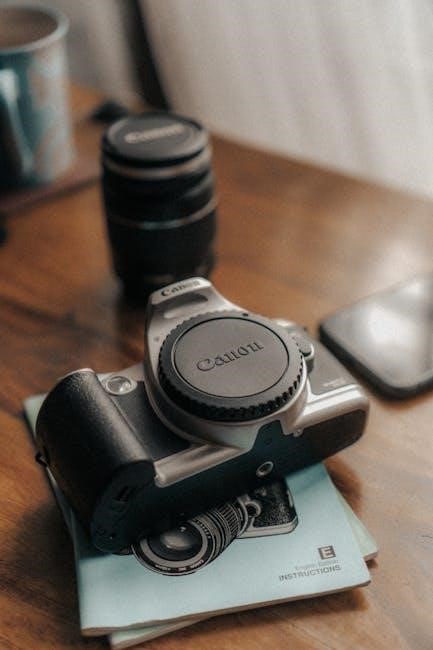
The Canon 70D excels in capturing fast-action sequences with its high-speed continuous shooting capabilities. It can shoot at up to 7 frames per second (fps) with autofocus and auto-exposure tracking, allowing you to freeze dynamic moments. This makes it suitable for sports, wildlife, and other fast-paced photography.
To activate high-speed continuous shooting, set the drive mode dial to ‘CH’. Consider using a fast SD card with a high write speed (UHS-I or faster) to prevent buffering and ensure continuous capture. The number of shots you can take in a burst depends on the card’s capacity and speed.
The 70D offers intelligent viewfinder display during continuous shooting, showing the previous frame to help track your subject. Remember that battery life is reduced during prolonged high-speed shooting. Utilizing the camera’s burst mode effectively requires practice and understanding its limitations.
Understanding Lens Serial Numbers & Production Dates
Canon EF lens serial numbers provide valuable information about the lens’s production date and origin. Previously, a two-digit code followed by four numbers indicated the month and year of manufacture. For example, ‘UD0123’ signified December 2001. However, Canon transitioned to a ten-digit serial number system around mid-2011, making decoding more complex.
Websites like TheDigitalPicture have successfully deciphered the new system, offering tools to determine production dates based on the serial number. Knowing the production date can be useful for assessing a used lens’s age and potential wear. It can also help identify lenses manufactured during specific periods with known quality control issues.
While not always definitive, the serial number provides a helpful clue about a lens’s history. Remember that serial numbers don’t reveal the lens’s usage or maintenance history, so a visual inspection and testing are still crucial when purchasing a used lens.
The Canon EF 28-80mm f/2.8-4L USM Lens
The Canon EF 28-80mm f/2.8-4L USM lens is highly regarded among Canon enthusiasts, often described as one of the best older Canon lenses available. It served as a predecessor to the 17-35mm f/2.8L and 16-35mm f/2.8L, offering excellent image quality for its time. This “red-ring” lens features Fluorite elements and a robust build quality.
Users consistently praise its exceptional sharpness and resolving power, claiming it rivals many modern lenses. While it doesn’t offer the wider range of newer zoom lenses, its performance within the 28-80mm range is outstanding. It’s a versatile option for various photographic applications, including landscapes, portraits, and general photography.
Finding a well-maintained copy can be a rewarding experience for Canon 70D users seeking a high-quality, affordable lens with a classic feel and exceptional optical performance.
Maintenance and Troubleshooting
Regular maintenance is crucial for preserving your Canon 70D’s performance. Gently clean the sensor with a blower and sensor brush, avoiding liquids unless professionally recommended. Regularly inspect and clean the lens contacts and body exterior with a soft, dry cloth. Store the camera in a dry, dust-free environment.
Troubleshooting common issues: If autofocus fails, ensure the lens is properly attached and the autofocus settings are correct. For image quality problems, check the ISO setting and ensure the lens is clean. If the camera freezes, try removing and reinserting the battery.
Further assistance: Canon’s website offers extensive support resources, including FAQs and downloadable software. If problems persist, contact Canon’s customer support for professional assistance. Avoid attempting complex repairs yourself, as this could void your warranty.
Advanced Features and Customization Options
Unlock the full potential of your Canon 70D with its advanced features. Customize the autofocus system using the 7-point AF and the autofocus start button for precise control. Explore Picture Styles to tailor image aesthetics directly in-camera, and create custom function settings for quick access to frequently used controls.
Dive into the menu system to fine-tune settings like white balance, metering modes, and ISO performance. Utilize the high-speed continuous shooting mode for capturing action sequences. The 70D allows extensive bracketing options for HDR photography and depth-of-field control.
Expand your creativity with custom shooting modes and user-defined functions. Explore the camera’s video capabilities, including manual exposure control and external microphone input. Regularly update the firmware to benefit from the latest enhancements and bug fixes, ensuring optimal performance.